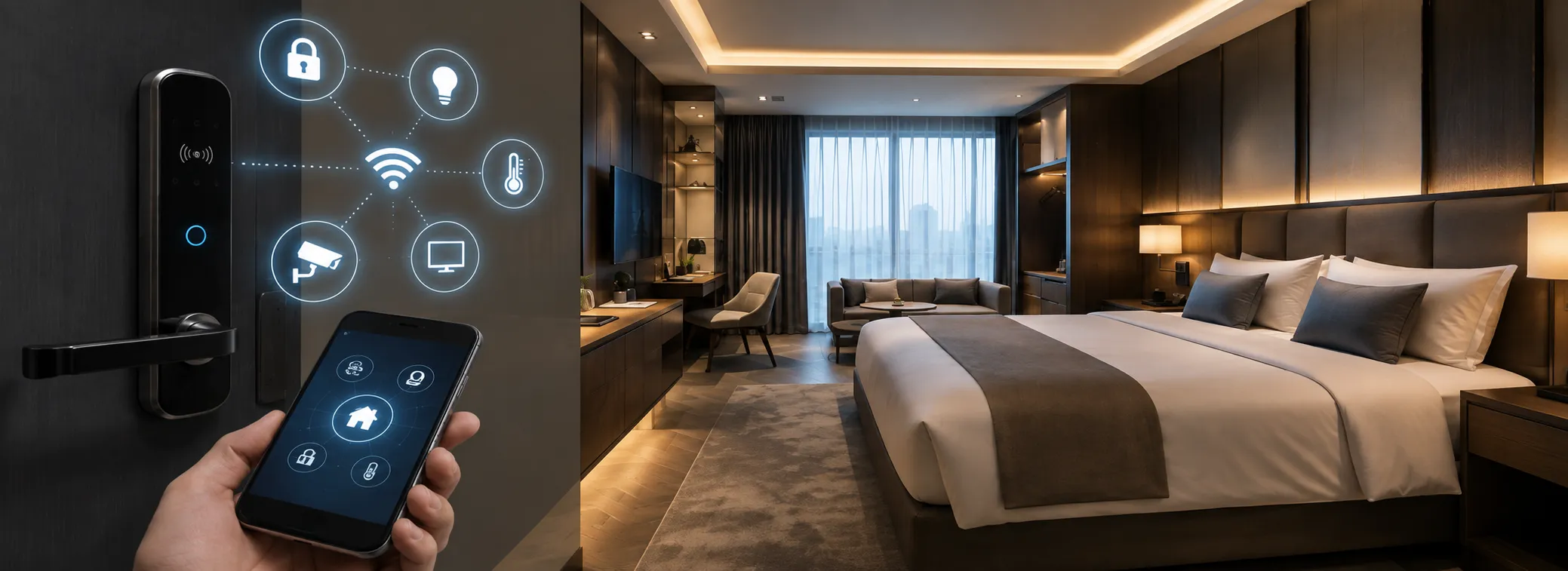
How Smart Automation Is Transforming Hotels with Better Guest Experiences and Lower Costs
Guests today expect more than a clean room and a friendly smile. They want mobile check-in, keyless entry, and a room that adjusts to their comfort the moment they walk in. At the same time, hotel owners are dealing with rising electricity bills, staff shortages, and tighter margins. This is exactly why Hotel Automation Coimbatore has become such a talked-about topic among hospitality businesses looking to modernize without overspending.
Smart automation gives hotels a way to solve both problems at once — happier guests and lower operating costs. In this article, we'll walk through what hotel automation actually means, how it improves the guest journey, where it saves money, and what to look for when choosing a partner to implement it.
What Is Smart Hotel Automation?
Smart hotel automation is the use of connected technology to control and monitor a hotel's rooms, systems, and operations from a single platform. Instead of separate, disconnected systems for lighting, air conditioning, security, and guest services, everything works together as one ecosystem.
This typically includes:
- IoT devices — sensors and smart devices embedded in rooms and common areas
- Mobile integration — apps that let guests and staff control systems remotely
- Cloud-based management — dashboards that give owners real-time visibility across properties
- AI-powered automation — systems that learn patterns and make small adjustments automatically, like dimming lights when a room is empty
Put simply, it turns a traditional hotel into a connected, responsive property that runs more efficiently with less manual effort.
Why Modern Hotels Are Investing in Smart Automation
A few years ago, automation was seen as a luxury feature. Today, it's becoming a practical necessity for several reasons:
- Labor shortages — many hotels struggle to find and retain enough front-desk and maintenance staff
- Rising electricity costs — HVAC and lighting are often the biggest energy drains in a property
- Higher guest expectations — travelers compare hotels to the smart homes and apps they use daily
- Staff efficiency — automation frees staff from repetitive tasks so they can focus on guest service
- Operational consistency — automated systems reduce the variation that comes from manual processes
- Sustainability goals — many hotel brands now report on energy use and carbon footprint
For hospitality businesses in growing cities, these pressures make hotel automation Coimbatore properties are exploring a natural next step rather than a nice-to-have upgrade.
How Smart Automation Improves Guest Experience
Smart Check-In
Guests can check in from their phone before they even arrive, skipping the front-desk queue entirely.
Keyless Room Access
A hotel door lock system that uses mobile credentials or access cards means no more lost keys or long waits for replacements.
Mobile App Control
Guests can adjust lighting, temperature, and curtains directly from an app without touching a single switch.
Voice-Controlled Rooms
Voice assistants let guests control room settings hands-free — useful after a long day of travel.
Smart Lighting
Lighting adjusts automatically based on time of day, occupancy, or guest preference.
Automated Curtains
Motorized curtains open and close on a schedule or with a simple app tap.
Smart Climate Control
Rooms pre-cool or pre-heat before guests arrive, based on check-in time.
Personalized Guest Preferences
Returning guests can have their preferred lighting, temperature, and entertainment settings restored automatically.
Digital Concierge
Chat-based assistants answer common guest questions instantly, any time of day.
Instant Service Requests
Housekeeping, room service, or maintenance requests can be sent with a single tap instead of a phone call.
Smart Entertainment Systems
Guests can stream their own content or control TVs directly from personal devices.
Each of these features removes small friction points from the guest stay — and small improvements, added together, shape how a hotel is remembered and reviewed.
How Smart Automation Reduces Hotel Operating Costs
Energy Saving
Occupancy sensors turn off lighting and HVAC in empty rooms. Smart thermostats adjust temperature based on real-time occupancy instead of running continuously. Automated lighting schedules cut waste in hallways, lobbies, and back-of-house areas.
Reduced Staff Workload
Routine tasks like adjusting room settings or logging maintenance requests are handled automatically, letting staff focus on guest-facing work.
Predictive Maintenance
Connected systems can flag equipment issues before they cause a breakdown, avoiding costly emergency repairs.
Water Management
Smart sensors help detect leaks early and monitor usage in high-consumption areas like laundry and pools.
Inventory Monitoring
Automated tracking reduces overstocking and last-minute shortages in housekeeping and F&B supplies.
Centralized Building Management
A single dashboard for HVAC, lighting, and security means fewer manual checks across departments.
Lower Maintenance Costs
Predictive alerts mean equipment is serviced on schedule, extending its working life.
Reduced Human Errors
Automated systems remove the inconsistency that comes with manual adjustments, especially across shifts.
Energy and labor are consistently among the largest controllable costs in hotel operations, which is why automation investments in these areas tend to show measurable returns over time.
Hotel Areas That Can Be Automated
Automation isn't limited to guest rooms. It can extend across nearly every part of a property:
- Guest Rooms
- Reception
- Lobby
- Conference Rooms
- Restaurants
- Spa
- Swimming Pool Systems
- Parking
- Security Systems
- HVAC
- Housekeeping
- Laundry
A phased approach — starting with guest rooms and security, then expanding to back-of-house systems — is often the most practical way for hotels to adopt automation without disrupting operations.
Smart Security Features in Hotels
Guest safety is non-negotiable, and automation strengthens it rather than compromising it:
- Smart Door Locks — mobile or card-based access with activity logs
- Access Cards — controlled entry for staff and restricted areas
- Mobile Access — guests unlock rooms directly from their phones
- CCTV Integration — centralized monitoring across the property
- Video Door Phones — added security for staff and back-of-house entry points
- Fire Alarm Integration — automated alerts connected to the building management system
- Emergency Alerts — instant notifications to staff during incidents
- Visitor Management — digital logging of visitor entry and exit
A well-designed hotel access control system doesn't just protect guests — it also gives management a clear audit trail for compliance and incident response.
Benefits for Hotel Owners
For hotel owners, the case for automation goes beyond convenience:
- Increased profitability through lower operating costs
- Better online reviews driven by smoother guest experiences
- Higher occupancy from a stronger brand reputation
- Improved guest loyalty and repeat bookings
- Faster day-to-day operations
- Better staff productivity
- Reduced operational expenses across energy and labor
- Improved overall brand image in a competitive market
These benefits compound over time, which is why many owners treat automation as a long-term investment rather than a one-time upgrade.
Why Choose Esquire Automations for Hotel Automation?
Implementing automation well requires more than just installing devices — it needs the right design, integration, and ongoing support. Esquire Automations serves as a reliable hotel automation partner in Coimbatore.
The team specializes in smart door locks, access control systems, energy management, and customized smart room solutions that are specifically designed to address the distinct needs of each property. From initial planning to professional installation and ongoing support, Esquire Automations works with hotel owners to implement systems that are reliable, secure, and easy for staff to manage day to day.
The Future of Smart Hotels
Hotel automation is still evolving, and several trends are shaping what's next:
- AI-powered hotels that adjust services based on guest behavior patterns
- Predictive guest preferences that personalize stays before guests even ask
- Robotics handling routine delivery and cleaning tasks
- Voice assistants becoming a standard in-room feature
- Contactless hospitality extending from check-in to checkout
- Sustainable hotels using automation to meet energy and environmental targets
- Smart energy optimization that adapts in real time to occupancy and weather
Hotels that start building this foundation now will be better positioned as guest expectations keep rising.
Conclusion
Smart automation has moved from a competitive edge to a practical requirement for modern hospitality. It improves guest satisfaction through smoother, more personalized stays. It strengthens operational efficiency by reducing manual work and errors. And it delivers real cost savings through smarter energy, water, and maintenance management — all while supporting long-term profitability.
If you are a hotel or resort owner considering hotel automation solutions in Coimbatore, selecting the appropriate partner is crucial. Reach out to Esquire Automations today to discuss a customized automation plan built around your property's needs.
